

 By
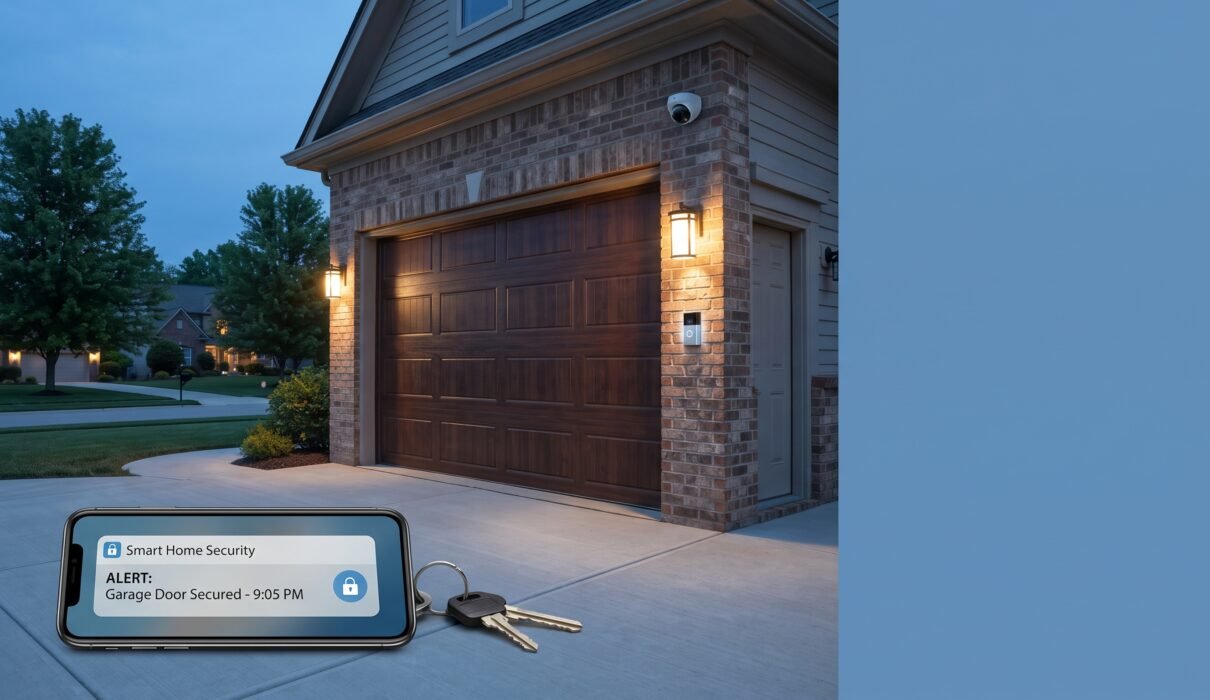
By In this guide, I’ll walk you through 9 practical ways How to secure garage door, from inexpensive security improvements to smart-home upgrades worth considering.
Your garage door is more than an entry point for your car. It can also provide access to tools, bikes, storage areas, and sometimes even the main living area of your home. The good news is that securing a garage door doesn’t always require an expensive security system. A combination of basic maintenance, better access control, improved lighting, and smart technology can make your garage significantly harder to enter without permission.
Why Garage Door Security Matters
Garage security is sometimes overlooked because homeowners tend to focus on front doors and windows first. But the garage has several potential weaknesses: the overhead door itself, the opener and remote, windows, side entrances, and the door connecting the garage to your home. Modern garage security is best approached in layers. Physical protection, secure access, good visibility, and smart monitoring can work together rather than relying on one device.
1. Make Sure Your Garage Door Closes Completely
This sounds obvious, but an open or partially closed garage door can create an unnecessary security problem. Before upgrading anything, make sure the door:
- closes fully against the floor
- stays closed after the opener stops
- doesn’t reverse unexpectedly
- has properly functioning safety sensors
- has a door that is reasonably well maintained
Take a few seconds to watch the door whenever you leave. Don’t assume it’s closed simply because you’ve pressed the remote. For automatic garage doors, safety is just as important as security.
Important: The U.S. Consumer Product Safety Commission says automatic residential garage door operators are subject to federal safety requirements, including entrapment protection. (U.S. Consumer Product Safety Commission)
Don’t ignore a malfunctioning door
A damaged spring, cable, track, roller, or panel isn’t something to experiment with. Garage-door hardware can carry substantial tension and can cause serious injury. Have major mechanical repairs performed by a qualified garage-door professional.
2. Protect the Emergency Release Without Disabling It
Automatic garage door openers include a manual emergency release so the door can be disconnected from the opener when necessary. That feature is important. But the release mechanism can also be a security consideration because someone may attempt to reach it from outside through the gap around the garage door. This is sometimes called the “fishing technique”.
The key is not to permanently disable or obstruct the emergency release. Instead, consider a purpose-designed emergency-release shield or professionally installed protection that makes unauthorized access more difficult while preserving the release’s intended operation from inside the garage.This distinction matters because garage-door safety features should remain functional. Before installing anything around the mechanism, follow your opener manufacturer’s instructions and make sure the emergency release can still be operated normally when needed.
3. Secure the Door Between Your Garage and Home
For an attached garage, the door leading into your house deserves just as much attention as the main garage door. Think of it as another exterior security boundary. Good practices include:
- Keep the door closed when you’re not passing through.
- Use an appropriate high-quality lock.
- Make sure the frame and strike area are sturdy.
- Don’t leave keys or access devices in an exposed location.
- Consider upgrading an especially weak or damaged door.
This is particularly important because even if someone gains access to the garage, a properly secured interior door can create another barrier between them and your living space.
4. Upgrade an Old Garage Door Opener
Your garage security isn’t only about the physical door. The opener and its access technology matter too. Older garage door openers may use older fixed-code systems. Modern systems commonly use changing or encrypted access technologies that are designed to make unauthorized replay of an old signal more difficult. When replacing an outdated opener, look for:
- Rolling-code or modern encrypted access
- Reliable safety sensors
- Battery backup where appropriate
- Smartphone monitoring
- Software and firmware support
Don’t choose an opener simply because it says “smart.” The important question is whether it provides useful security features and whether the manufacturer continues to support the product.
5. Never Leave Your Garage Remote in an Unsecured Vehicle
Your garage-door remote should be treated much like a key to your home. Leaving it visible in a vehicle can create a security problem, particularly if the vehicle is parked outside your home. Instead:
- Keep portable remotes with you when practical.
- Remove them from vehicles that are left outside.
- Don’t leave spare remotes in obvious locations.
- Review which remotes still have access.
- Erase the access of lost or stolen remotes when your opener supports that function.
Also review who currently has access to the garage. Old remotes that belonged to previous residents, contractors, or family members shouldn’t remain active indefinitely.
6. Add a Garage Door Sensor or Smart Controller
This is where garage security becomes much more interesting for a smart home. A simple sensor can tell you whether your garage door is open or closed. A smart garage controller can take that a step further by allowing you to monitor the door from your phone and, depending on the product, receive notifications or create automation rules.
For example:
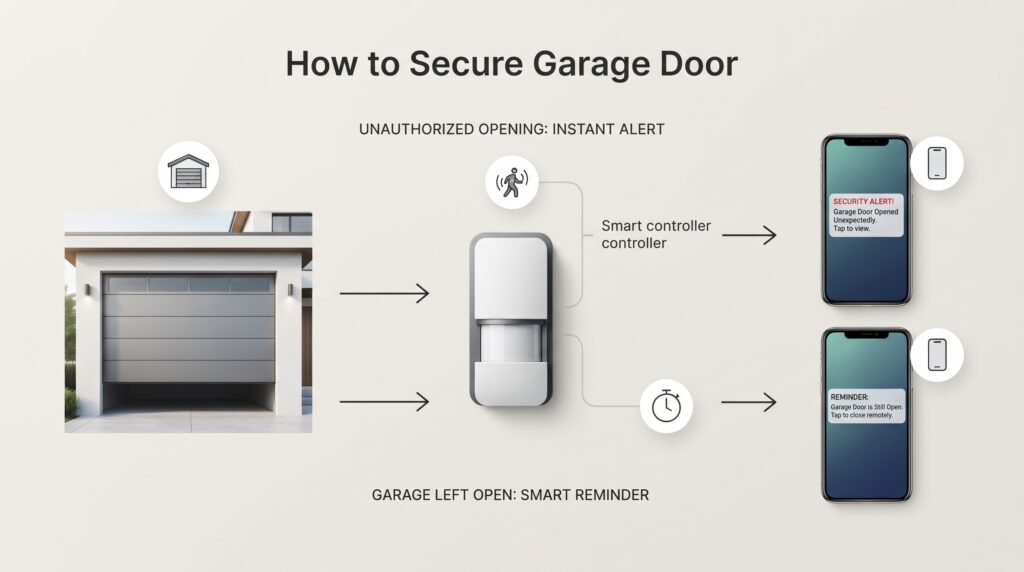
Some systems can also support scheduled or automatic closing, but this feature should be used carefully and configured according to the manufacturer’s safety requirements.
The biggest advantage isn’t that you can open your garage from your phone. It’s that you can know what’s happening when you’re away. That’s especially useful when you’re traveling, at work, or simply can’t remember whether you closed the garage.
7. Improve Lighting Around the Garage
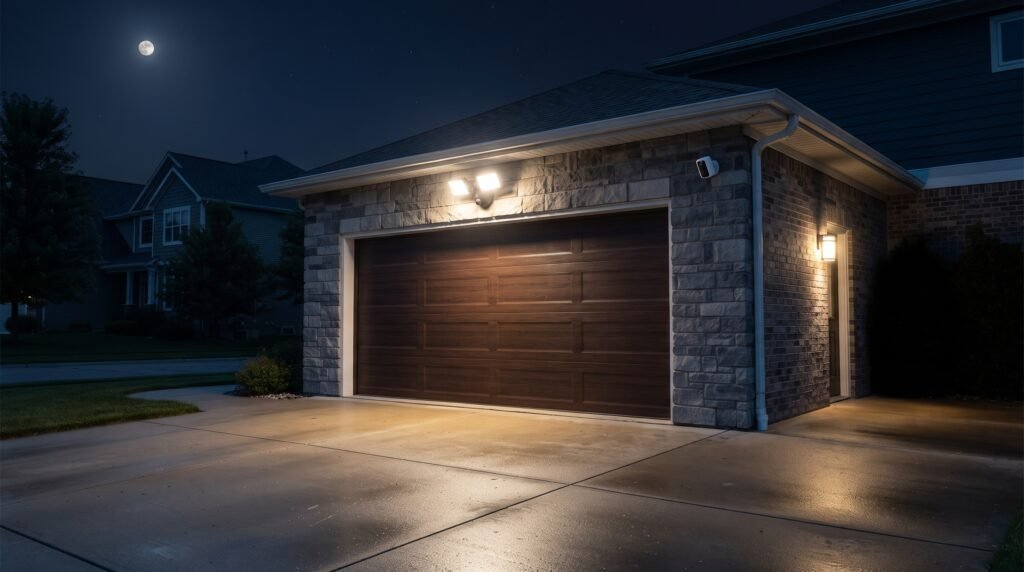
A dark garage entrance can provide privacy for someone trying to approach your home unnoticed. Good outdoor lighting improves visibility and can make the area less attractive to someone looking for a concealed entry point. Consider:
- Motion-activated lights near the garage
- Lighting around side entrances
- A well-lit driveway
- Lighting near pedestrian doors
- Avoiding large areas of deep shadow
You don’t necessarily need extremely bright floodlights. The goal is to eliminate easy hiding places while giving your security cameras and your own eyes a better view.
8. Secure Garage Windows and Side Doors
The main garage door isn’t necessarily the only weak point. If your garage has windows, ask yourself what someone outside can see through them. Visible tools, bicycles, electronics, or expensive equipment can make the garage more interesting to a potential intruder. Simple measures can help:
- Use blinds or curtains where appropriate.
- Consider privacy or security film for suitable windows.
- Keep valuable items away from direct view.
- Lock windows that can be opened.
- Reinforce weak side or pedestrian doors where necessary.
Recent garage-security guidance similarly recommends treating windows, side entrances, lighting, and the opener as part of the overall security picture rather than focusing only on the overhead door.
9. Build Better Garage Security Habits
Technology helps, but everyday habits still matter. A surprisingly effective security routine can be simple:
- Close the garage door every time you leave.
- Don’t leave the remote visible in a parked car.
- Keep the interior door locked.
- Don’t leave spare keys in obvious places.
- Check the garage before going to bed.
- Review who has access to your garage.
- Keep valuable items out of direct view.
- Test your garage-door safety features regularly.
A smart system can reduce the chance of forgetting, but it can’t replace sensible habits.
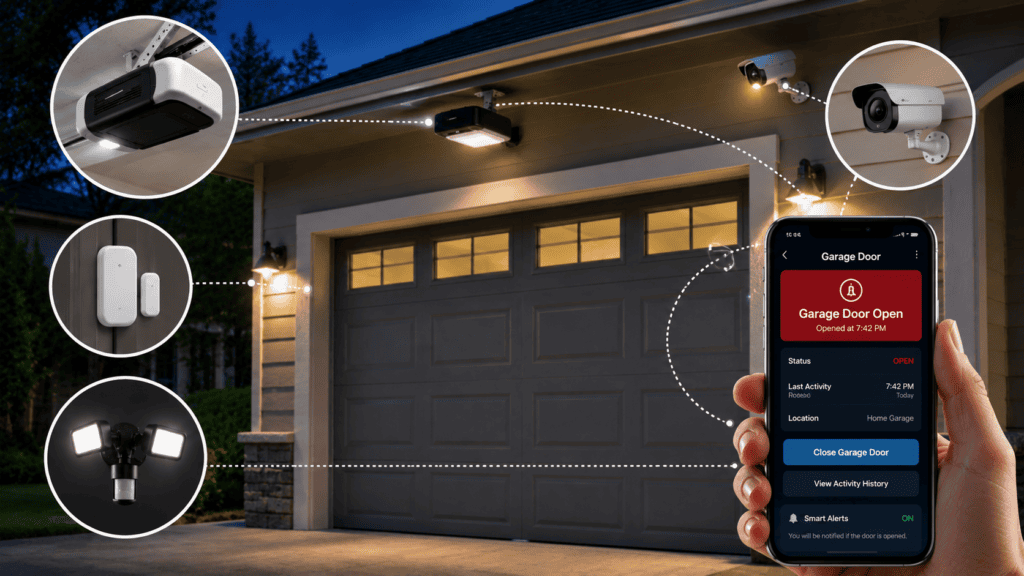
Smart Garage Security: What Should You Actually Buy?
You don’t necessarily need to replace your entire garage-door system. Start by identifying the problem you want to solve.
- If you often forget to close the door: Look for a smart garage controller or opener that provides open/close status notifications and, where appropriate, an automatic-close feature.
- If your opener is very old: An opener upgrade may make more sense than adding another device to an outdated system.
- If your garage is dark: Start with motion-activated lighting.
- If you have poor visibility: A security camera can help you see what’s happening around the garage.
- If you’re concerned about someone entering the house: Prioritize the door between the garage and your living space.
The best security setup is usually the one that addresses your actual weak points rather than simply adding more gadgets.
Should You Get a Smart Garage Door Opener?
A smart garage door opener can be worthwhile if you want more visibility and control over your garage. Depending on the model, useful features may include:
- Smartphone control
- Open/close notifications
- Remote status checking
- User access management
- Activity history
- Automatic closing
- Integration with a broader smart-home system
However, smart technology introduces another account and network-connected device into your home. That means you should also secure the associated account, use a strong unique password, enable two-factor authentication when available, and keep the device’s software updated. A smart garage doesn’t automatically equal a secure garage.
Don’t Forget Garage Door Maintenance
Security and maintenance overlap more than many homeowners realize. Check your garage door periodically for obvious problems such as:
- Damaged panels
- Worn weather seals
- Bent tracks
- Unusual movement
- Excessive noise
- Broken or damaged cables
- Problems with the opener
- Misaligned safety sensors
Don’t attempt to repair high-tension springs or cables yourself unless you’re trained and equipped to do so.
The CPSC’s garage-door safety guidance emphasizes following installation and operating instructions, keeping the moving door in sight, and ensuring that the door’s safety reversing system works correctly. (U.S. Consumer Product Safety Commission)
How Much Does It Cost to Secure a Garage Door?
The cost depends on what your garage currently needs. A basic security improvement might cost very little if you’re simply improving habits, checking access, or adding better lighting. A more advanced setup could include:
- Low cost: Better lighting, privacy measures, access review, basic maintenance
- Moderate cost: Security cameras, sensors, improved locks, opener upgrades
- Higher cost: New smart garage-door opener, professional door repairs, multiple integrated security devices
The important thing is to fix the biggest weakness first. There’s little benefit in buying an expensive smart controller if your garage’s physical door, interior entry door, or lighting is still poorly secured.
Garage Door Security Checklist
Use this quick checklist to see where your garage stands:
Download PDFFAQ
What is the best way to secure a garage door from break-ins?
There isn't one single solution. A layered approach is better: secure the garage-to-home door, use a modern opener, protect the emergency-release mechanism without disabling it, improve lighting, control remote access, and consider smart monitoring.
Are smart garage door openers secure?
They can provide useful security and monitoring features, but the security of the overall setup also depends on the account, network, software updates, and how access is managed.
Should I leave my garage door remote in my car?
It's better not to leave a garage-door remote exposed in a vehicle, particularly when the vehicle is parked outside your home.
Can a smart garage controller prevent a break-in?
A smart controller can improve monitoring and control, but it isn't a physical security barrier. Think of it as one layer of a larger garage-security system.
How often should I check my garage door?
Make it part of your normal home-maintenance routine and test safety functions according to the opener manufacturer's instructions. If you notice unusual movement, damaged components, or safety problems, have the system inspected.
Final Thoughts
Learning how to secure a garage door doesn't mean turning your garage into a fortress.
The most effective approach is to combine several practical layers: make sure the door and opener work correctly, control who has access, protect the garage-to-home entry point, improve visibility, and add smart monitoring when it solves a real problem.
Start with the weak point that's easiest to fix today. Then build from there. A properly maintained garage door, secure access system, good lighting, and a smart alert system can give you considerably more confidence than relying on a single lock or gadget.
Your garage is part of your home's security system. Treat it that way.