

 By
By Smart home technology is no longer just about having a few connected gadgets. When your devices work together, they can make everyday tasks easier, improve security, and even help you use energy more efficiently.
The good news is that you don’t need to build an expensive futuristic home to get started. A few simple automations can make a noticeable difference.
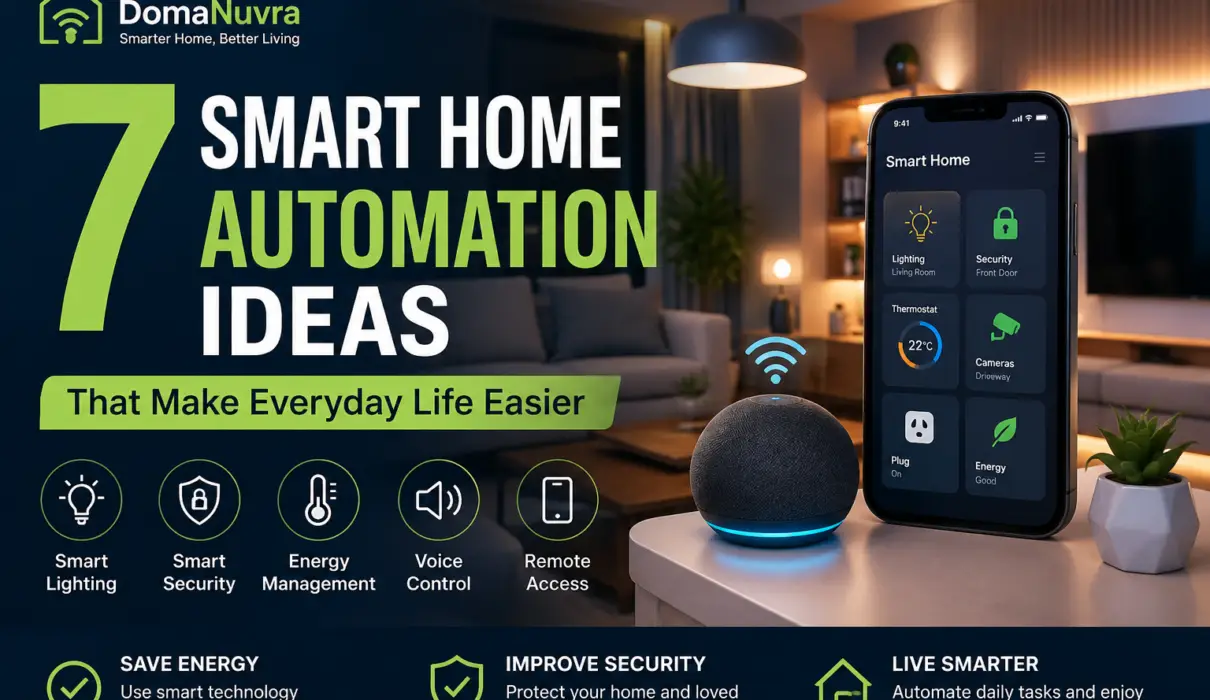
In this guide, we’ll look at 7 practical smart home automation ideas that are easy to understand and useful for everyday living.
1. Automate Your Lights
Smart lighting is one of the easiest ways to start automating your home.
You can create routines that automatically turn lights on when you arrive home, switch them off when everyone leaves, or gradually dim them before bedtime.
You can also connect motion sensors to lights in hallways, bathrooms, or other areas where you don’t always want to reach for a switch.
Why it’s useful:
- Saves time
- Can reduce unnecessary energy use
- Makes your home more convenient
2. Create a Good Morning Routine
Imagine waking up and having several things happen automatically.
Your smart home could turn on selected lights, adjust the thermostat, start a coffee maker, and give you a morning weather update.
Instead of managing several devices individually, one routine can handle everything.
3. Use Smart Security Automation
Smart security isn’t only about watching cameras.
You can create automations that turn on outdoor lights when motion is detected, send alerts when a door opens, or lock smart doors automatically at a certain time.
Combining cameras, sensors, lights, and locks can create a much more connected security system.
4. Automate Energy Usage
Smart plugs, thermostats, energy monitors, and compatible appliances can help you understand and manage how your home uses electricity.
For example, you can automatically switch selected devices off when you’re away from home or create schedules for equipment that doesn’t need to run continuously.
5. Build an “Away From Home” Routine
Leaving home can trigger an automation that handles several tasks at once.
For example:
When everyone leaves:
- Turn off selected lights
- Adjust the thermostat
- Lock smart doors
- Activate security devices
- Turn off unnecessary appliances
This simple routine can save you from checking every room before you leave.
6. Automate Your Evening
A bedtime routine can make your evenings much easier.
With one command, you could turn off downstairs lights, lock doors, adjust the temperature, and activate security sensors.
You can even schedule certain devices to turn off automatically after you’ve gone to bed.
7. Start Small and Expand
You don’t need to automate your entire house on day one.
Start with one area, such as lighting or security, and learn how the devices work together. Once you’re comfortable, you can gradually add more devices and routines.
The key is to build a system that solves real problems rather than simply adding more gadgets.
Final Thoughts
Smart home automation works best when it makes everyday life simpler.
Whether you’re starting with a single smart plug or planning a fully connected home, the best approach is to begin with practical automations that you’ll actually use.
At DomaNuvra, we’ll continue exploring smart home devices, automation, solar technology, and home security to help you make smarter decisions for your home.
What would you automate first—lighting, security, or energy?